Tahir Manzil
Mafia Queens of MumbaiTahir Manzil stands on Lamington Road as the home of Abdul Karim Khan, known to the underworld as Karim Lala, the Pathan gangster who headed the Pakhtoon Jirgai Hind and built one of the most formidable gangs in Mumbai alongside Haji Mastan and Vardharajan Mudaliar. The building is inseparable from the moment Gangubai Kathiawadi, a brothel madam from Kamathipura, crossed from her own territory into his, seeking redress for a wrong done to one of her girls. It is the rare address where the two worlds of the city's criminal geography — the red-light lanes and the gangster's fortified home — visibly touched.
Location and Setting
Tahir Manzil sits on Lamington Road, a street that runs through the dense, Muslim-dominated heart of south Mumbai. The area belongs to the same urban fabric as Dongri, the original island district where Jenabai Daaruwali was born in the early 1920s and raised in a one-room tenement on Mohammad Ali Road. Dongri itself was carved from levelled hills in the mid-1700s, when the seven islands of Mumbai were merged, leaving a low-lying patch between Crawford Market in the north and the reclaimed lands of Kamathipura in the south. Tahir Manzil's immediate neighbourhood shares this crowded, layered character — a zone of rickety old buildings, bazaars spilling onto footpaths, and the constant commerce of a working-class Muslim quarter. The lane leading to the building, Baida Galli, was the approach Gangubai used when she came to wait for Karim Lala.
The building's significance is amplified by its proximity to the city's other landmarks of mortality and crime. Not far away, abutting Marine Lines station, lies Bada Qabrastan, a sprawling 7.5-acre cemetery over a hundred and fifty years old, so close to the railway that commuters cut across it to reach the over-bridge. The graveyard is where Haji Mastan, the gold smuggler who rose from a Chennai mechanic to a millionaire don, is remembered each year on his death anniversary by his three daughters with flowers and rose petals. Tahir Manzil, by contrast, is a residence of the living — yet it carries the same weight of a world where death and power are never far apart.
The Encounter at the Gate
It was a Friday afternoon when Gangubai Kathiawadi decided she could wait no longer. She had quarrelled bitterly with Sheela, one of the women in her brothel, over how to handle the Pathan who had beaten and abused her. Gangubai realised that silence would set a precedent for bigger problems, so she made enquiries and learned through a client that the man was called Shaukat Khan, associated with the Karim Lala gang. Despite the other girls, including Sheela, trying to dissuade her — Karim Lala was infamous for his aggressiveness in south Mumbai — she remained obstinate.
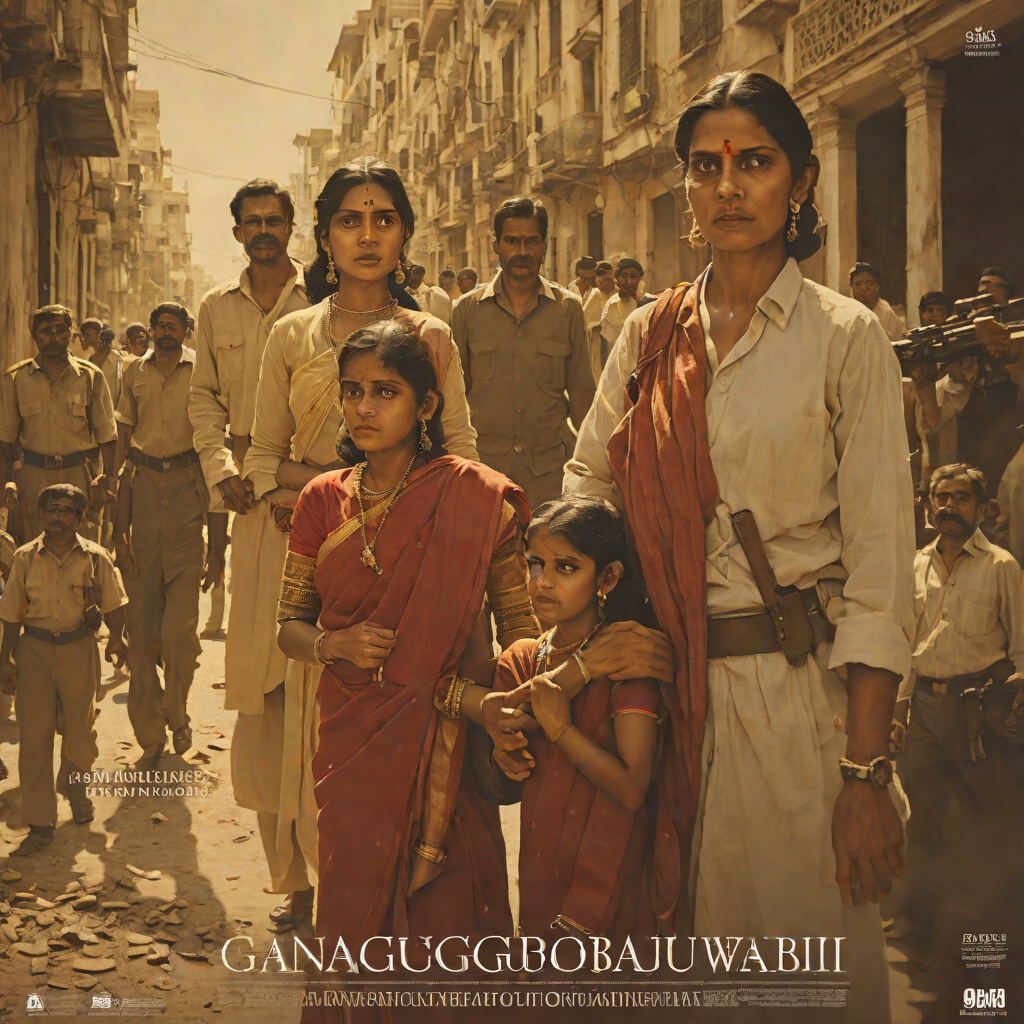
She positioned herself outside Baida Galli, the lane leading to Tahir Manzil, and waited. When Karim Lala emerged after offering his Jumma namaaz and began walking home, she accosted him. 'Karim bhai, salaam. I need a small favour from you,' she said. From her appearance, the dour Pathan figured she was a commercial sex worker from the nearby area. It was a moment of extraordinary audacity: a woman from Kamathipura, the city's most stigmatised red-light district, standing in the path of one of Mumbai's most dangerous men at the threshold of his own home.
The Threshold of Power
Tahir Manzil marks the precise point where Gangubai's authority in Kamathipura intersected with the male-dominated mafia hierarchy. Karim Lala was known for being respectful towards women, a reputation that made him the only gangster she felt she could approach. The building thus became the stage for a transaction that would reshape her standing: by appealing to him directly, she bypassed the usual channels of fear and violence and established herself as someone who could speak to the top of the underworld as an equal. The encounter at Tahir Manzil was the seed of the rakhi bond she would later tie with Karim Lala, transforming a business appeal into a ritual kinship that gave her protection and legitimacy.
The building also stands in contrast to the other power centres of the Mumbai underworld. Where Tahir Manzil was the home of the Pathan gang, Haji Mastan's villa and his Mercedes were the visible trappings of his smuggled wealth, and Vardharajan Mudaliar's illicit hooch distillery at Sion-Koliwada anchored the Tamilian underworld. Each don had his own address, his own fortress, and Tahir Manzil was Karim Lala's. It was the place where a woman from the brothels could come, wait, and be heard — a rare opening in a world that otherwise dealt in violence and silence.
Narrative Significance
The scene at Tahir Manzil is one of the book's clearest demonstrations of how women navigated the male criminal world not by imitating its brutality but by exploiting its codes. Gangubai's approach to Karim Lala was calculated, respectful, and framed as a request for a favour rather than a demand. The building itself becomes a symbol of that strategy: a threshold she crossed not by force but by nerve. In the broader geography of the book, Tahir Manzil belongs to the constellation of places — Bada Qabrastan, Sonapur Lane, the Sion-Koliwada slum — where the city's criminal history is written into its streets. But unlike the graveyard or the drug den, Tahir Manzil is the site of a beginning, the moment a brothel madam stepped into the mafia's inner sanctum and changed the course of her own legend.